Storage Types

What is Storage?
Storage is the hardware or service used to save, retain, and retrieve digital data, either temporarily or permanently.

Main Storage Types

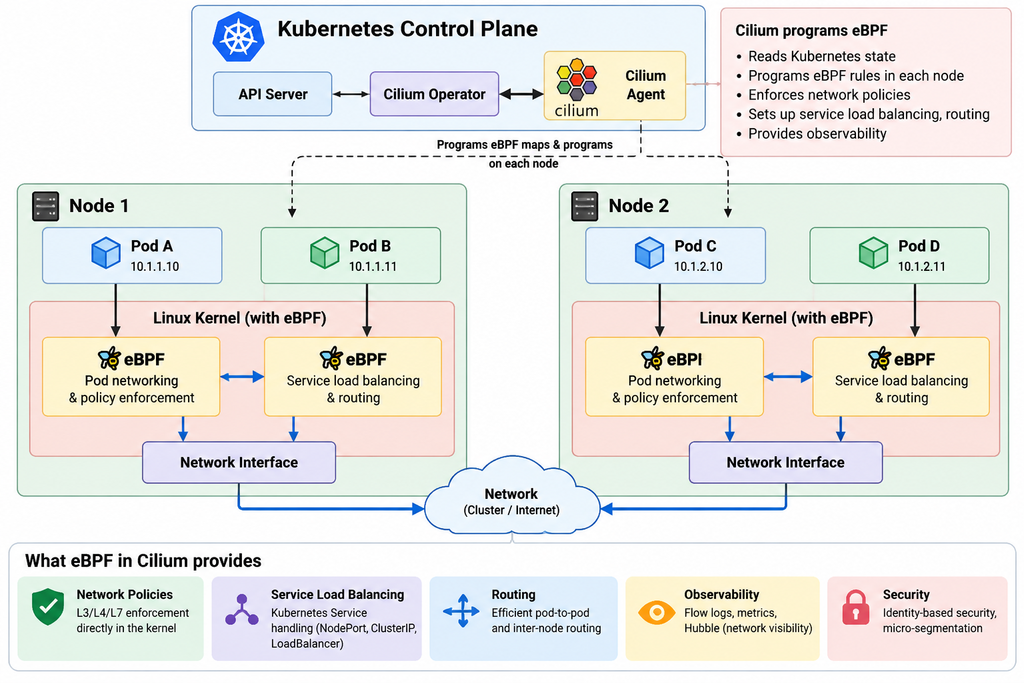
  • Block Storage – Data stored in fixed-size blocks; ideal for disks, VMs, and databases.
  • File Storage – Data organized as files and folders; commonly accessed through NFS or SMB.
  • Object Storage – Data stored as objects with metadata; ideal for backups, media, logs, and cloud-scale data.
  • Local/Ephemeral Storage – Fast storage attached to a server; often used for temporary data.
  • Archive Storage – Low-cost storage for long-term, rarely accessed data.

Different storage types provide different levels of performance, persistence, scalability, sharing, availability, and cost. Choosing the right type ensures applications get the required speed, reliability, data protection, and cost efficiency.
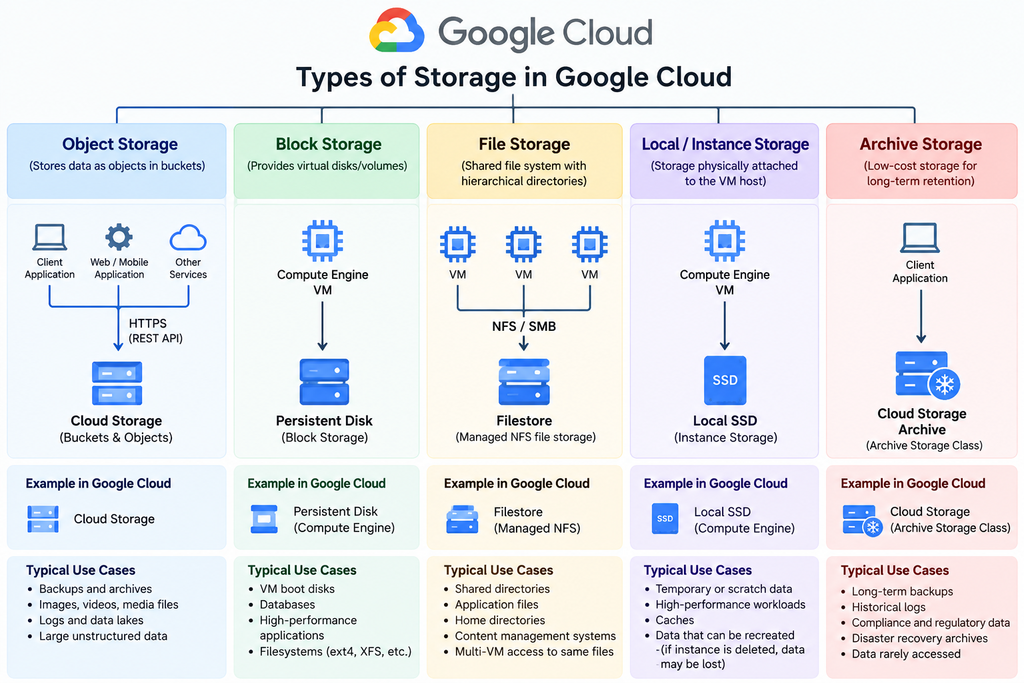
Kubernetes Storage Types
k8S OpenShift Architecture

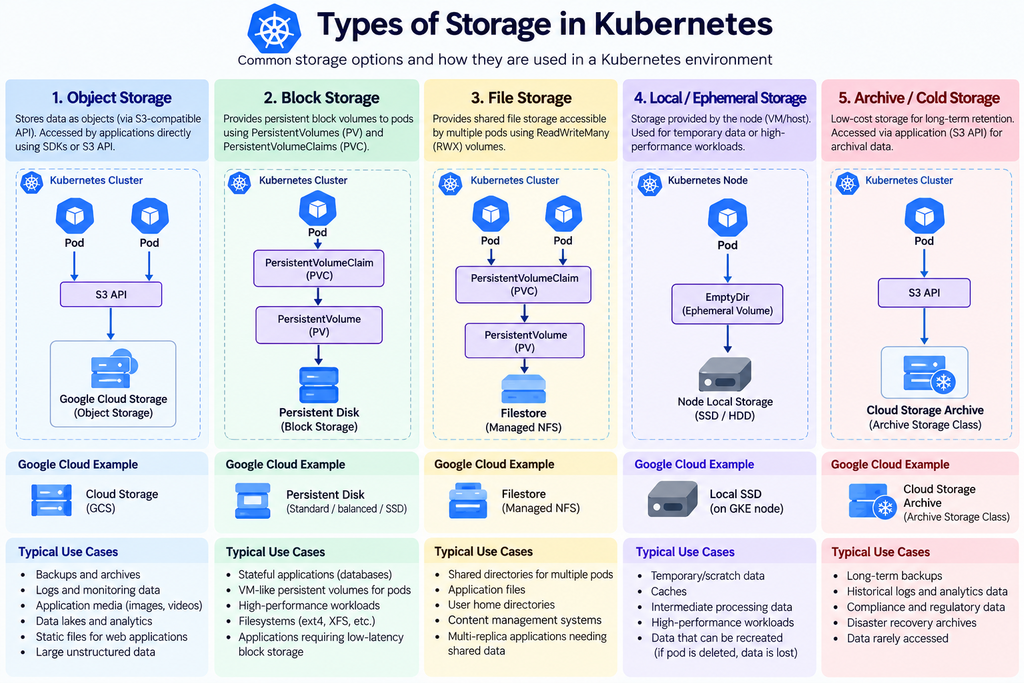
Red Hat OpenShift is an enterprise container platform built on Kubernetes. It provides an integrated environment for deploying, managing, scaling, and securing containerized applications across physical, virtual, and cloud infrastructure.

Main architectural components:

  • Control Plane – Manages the cluster through the API Server, etcd, Scheduler, Controller Manager, and OpenShift Operators.
  • Worker Nodes – Run application pods using kubelet and the CRI-O container runtime.
  • Networking – OVN-Kubernetes provides pod networking, routing, load balancing, NetworkPolicy, and ingress/egress connectivity.
  • Platform Services – Includes Routes/Ingress, authentication, image registry, monitoring, logging, Operators, and developer tools.
  • Storage – CSI-based persistent storage can integrate with Ceph/ODF, SAN, NAS, and cloud storage.
  • Infrastructure – OpenShift can run on bare metal, virtualization platforms, private clouds, and public clouds.

In simple terms:
OpenShift = Kubernetes + Networking + Security + Automation + Monitoring + Developer Tools.

k8S/Cilium eBPF – extended Berkeley Packet Filter

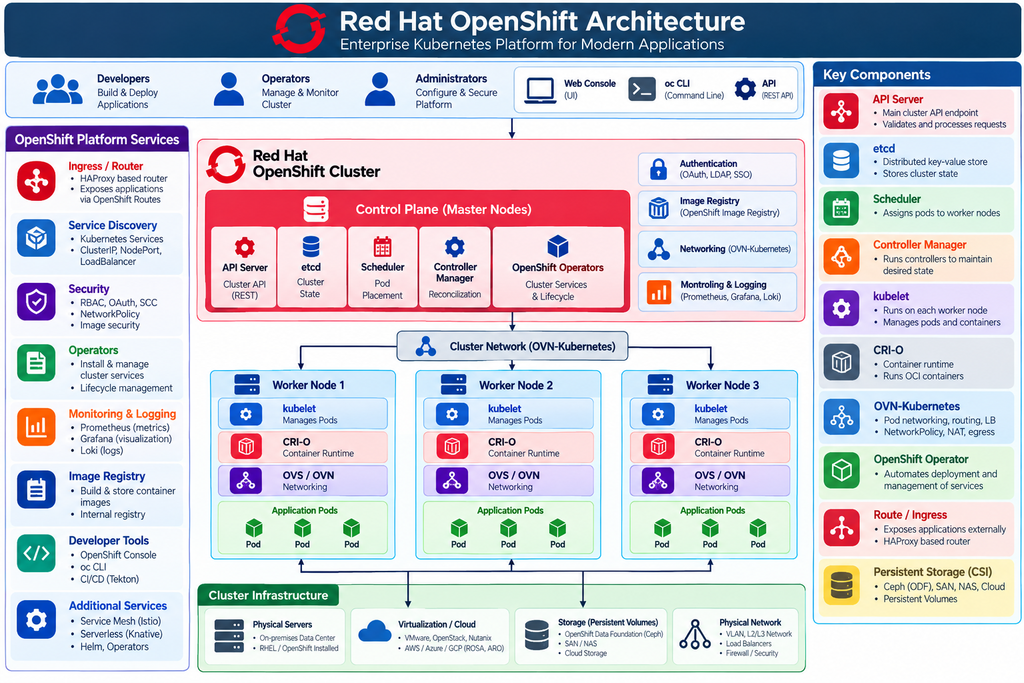
eBPF (extended Berkeley Packet Filter) is a Linux kernel technology that allows small, secure programs to run directly inside the kernel without modifying kernel source code.

In Cilium, eBPF is mainly used for:

  • High-performance networking between Kubernetes pods and nodes
  • Network policy & security enforcement
  • Service load balancing and routing
  • Traffic monitoring & observability with Hubble
  • Reducing or replacing traditional iptables-based packet processing

In short: eBPF gives Cilium a programmable, efficient way to control and observe network traffic directly inside the Linux kernel.

In simple terms:

Pod → eBPF (Cilium) → Network → eBPF → Pod

eBPF allows Cilium to provide things such as network policies, load balancing, routing, service handling, and network visibility, often without relying heavily on traditional iptables.